

Pose, Power, and Protest: How Black Americans Shaped Ballroom Culture
- Dr. Jasmine Brock-Ingram

- Jun 1
- 6 min read
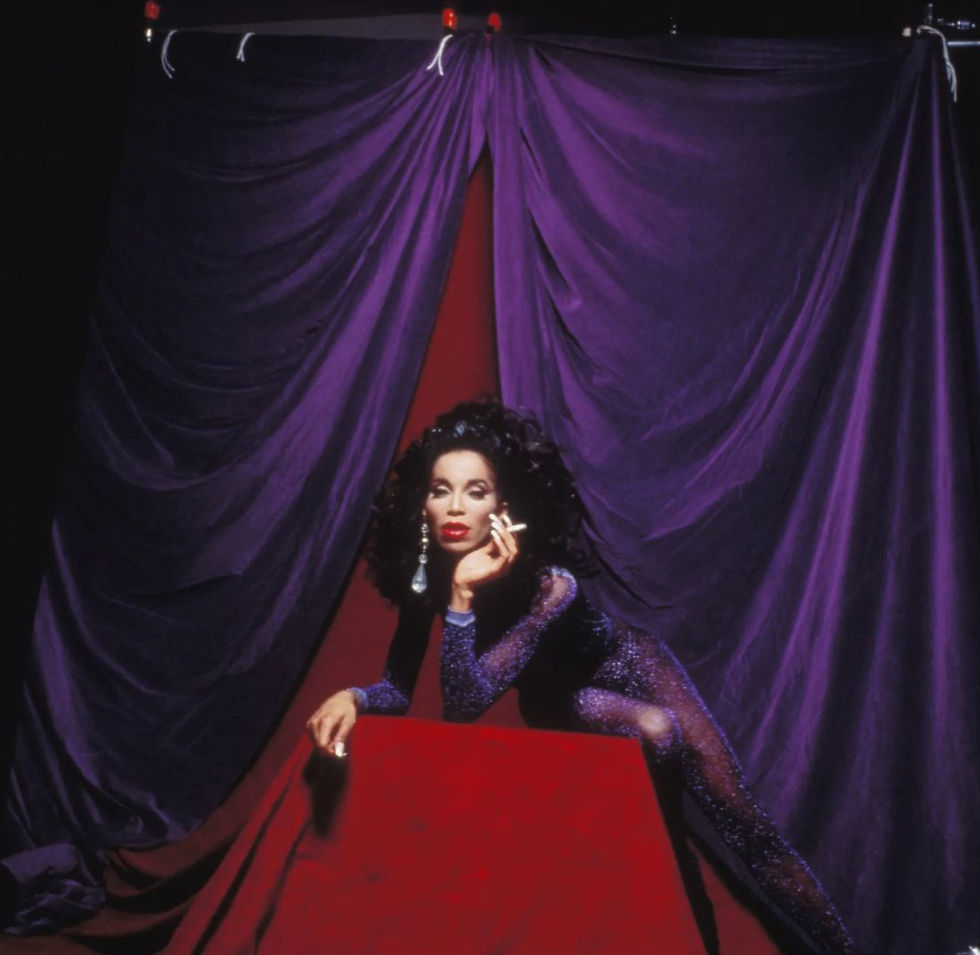
Octavia Saint Laurent (Photo: Off White Productions/Courtesy Everett Collection)
“The category is…”
The first time that I was introduced to Ballroom culture was back in 2021 when FX released a new series called Pose. I felt like I was transported into a magical world of opulence where creativity and imagination had no bounds. What fascinated me the most was the overall artistry of the Balls from the makeup, hair, and costumes, to the larger-than-life personalities that were iconic in their own right. On the surface Ballroom can appear to be an elaborate party full of people playing dress-up, but underneath is something much more beautiful. As I dug deeper I discovered that Ballroom wasn’t just a festive event, but an entire ecosystem of individuals seeking safety, community, and artistic freedom. In the early 1970s, Black and Latino gay, trans and queer people developed a thriving subculture in House Balls, that continues to permeate mainstream pop culture, language, and fashion. But, in order to understand Ballroom as we know it today, you have to go back to the beginning.
The lineage of Drag Balls reaches further back in time than one may expect. Following the Civil War, Cross-Dressing Balls have existed since the late 1800s. In 1869, the first recorded Drag Ball in US history was organised in Harlem's Hamilton Lodge No. 710, New York as a masquerade charity gala. Both men and women would dress in clothing that was typically worn by the opposite sex. The Balls featured a pageant contest in which drag performers competed for cash prizes. Prizes were awarded for the most accurate cross dressing performance as well as best attire. These gatherings were a way for queer, gender-nonconforming, and cross-dressing individuals to celebrate their identities. However, attendees were frequently harassed by authorities due to violating numerous anti-crossdressing laws that existed at the time. Despite the harassment, Drag Balls continued to gain popularity in other US cities. In the late 1880s, a formerly enslaved man named William Dorsey Swann started hosting private balls in Washington, D.C., whose attendees were also formerly enslaved Black men. Swann is recognized as the first person in the United States to lead a gay resistance group and the first known person to self-identify as a "Queen of Drag.”

Harlem nightclub dancers, 1937, in the collection of the Smithsonian American Art Museum (Photo by Aaron Siskind)
As Drag Balls continued for decades, they grew in popularity—and notoriety. These balls were considered illegal and taboo to the outside world, driving the competitions underground and making them even more appealing. At the beginning of the twentieth century, a distinctly Black LGBTQ culture began to take shape in Harlem. The Harlem Renaissance (1920’s-1930’s) was particularly influential to this process. The growing freedom and expression of Black culture during the Harlem Renaissance not only allowed Black American artists—from painters and authors to dancers and musicians—to experiment with and reinvent their crafts, but Black artists were given the freedom to explore gender, sex and sexuality like never before. Many of the movement’s leaders were openly gay or identified as having nuanced sexualities including Angelina Weld Grimké, Claude McKay, Langston Hughes, Wallace Thurman, Alice Dunbar-Nelson, Alain Locke, and Richard Bruce Nugent among others. The movement offered a new language that challenged social structures and demonstrated the ways that race, gender, sex and sexuality distinctions were actually intersecting, fluid and constantly evolving. The poet Langston Hughes described his experience at a New York Drag Ball in the 1920s as the "strangest and gaudiest of all Harlem spectacles" at the time. Although Drag Balls were interracial at Harlem’s Hamilton Lodge, prejudices were still at play with judges generally favoring white, Eurocentric features. It wasn’t until 1936—69 years after their first ball—that a Black contestant took home the top prize for the first time. As the balls expanded to other major cities in the early to mid-20th century, racial bias in judging continued.

1967 Miss All-America Camp Beauty Pageant (Fred W. McDarrah/Getty Images)
The birth of House Ball Culture in the late 1960s and early 1970s emerged as a direct response to racism and transphobia in the broader downtown drag pageant scene. When a white contestant, Miss Philadelphia Rachel Harlow, took the crown in the 1967 Miss All-America Camp Beauty Pageant, Black contestant Crystal LaBeija, representing Manhattan, claimed the judges had discriminated against Black and Latinx contestants and that the pageant was rigged. LaBeija refused to participate in any more drag pageants because she was tired of being overlooked for not fitting the "European" standard of beauty. In the early 1970s, Harlem drag queen Lottie LaBeija convinced Crystal to promote her own Ball. Crystal agreed, and the House of LaBeija—the first ever Ballroom “House”—was born, with Crystal at the helm as “Mother.” Crystal and Lottie went on to host the first House Ball in Harlem, titled “Crystal & Lottie LaBeija presents the first annual House of LaBeija Ball.” The Ball, designed exclusively for Black and Latinx trans and queer people, was a success. From then on emerged the system that we know today, with Ball contestants walking in different categories and battling it out for prizes.
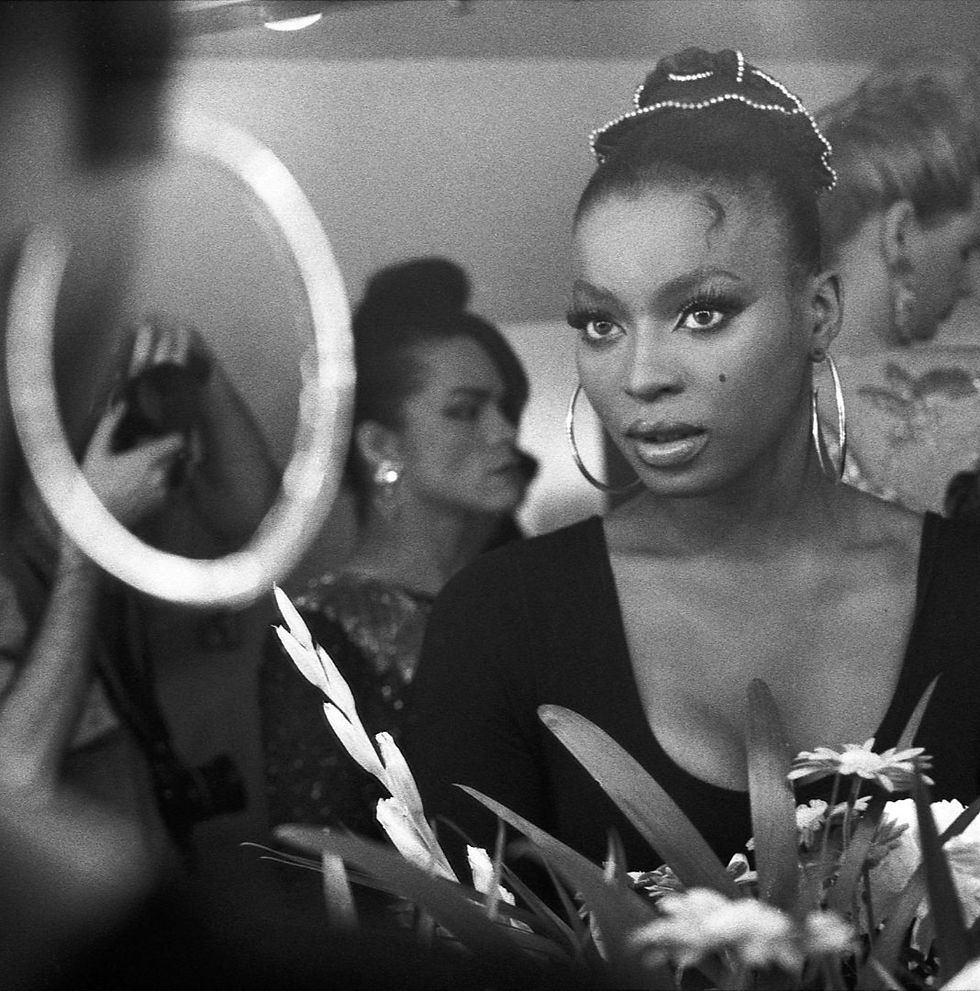
Modavia Labeija, A Night of Fabulous Fakes and Voguing Competition (Copyright © Chantal Regnault, 1991)
From its inception, Ballroom Houses offered security for Black and Latinx queer and trans people. Many of which were either exiled from their homes or left on their own due to non-supportive families that did not accept their sexuality. As a means of survival, Houses were created as an alternative chosen family structure. These houses were led by older, experienced Ballroom figures known as "Mothers" that guided and groomed their House “children” for the world. For many LGBTQ+ people these Houses were the first place that they were able to comfortably live as their authentic selves. The Houses provided shelter, mentorship, love, and served as teams for the fierce competitions held at the Balls. Notable Houses include The House of Aviance, The House of Balenciaga, and The House of Xtravaganza. Instead of the traditional pageant-style of competition in Drag Balls, House Balls held competitions between Houses where individuals walked specific categories to win trophies, cash prizes, and status. Participants dressed according to the guidelines of the category in which they were competing. Categories ranged from face (the judging of a house members’ beauty) to body (the appreciation of a house members’ curves), to runway, and performances. The competitions allowed participants to explore gender expression, high fashion, and performance art. The House Balls further differentiated from the Drag Balls once gay men were allowed to compete. This marked a significant shift from trans women and female-presenting people in House Ballroom to the inclusion of gay men and male-presenting people in Houses and House Ballroom.

The “Godfather of Vogue,” Willie Ninja (Copyright © Chantal Regnault, 1989)
The most notable influence of Ball culture on mainstream society is Voguing. Voguing is an improvisational dance style that originated in Drag Balls held by the queer community of color during the latter half of the 20th century. Named after the famous magazine, Vogue took from the poses in high fashion and ancient Egyptian art, with an emphasis on exaggerated arm and hand movements. Dancers would play out elaborate scenes such as applying makeup or taking phone calls while dancing down the catwalk. Voguing was a form of self-expression through movement. This creative performance was often used to peacefully settle disputes among rivals in an environment that assumed a degree of mutual respect and compassion. Dancer and choreographer Willi Ninja has been recognized as the "Godfather of Vogue." Voguing first crossed over into mainstream pop culture after appearing in the video for Malcolm McLaren's “Deep in Vogue,” released in 1989, followed by Madonna's "Vogue," released in 1990. During 1990 Jennie Livingston also released her groundbreaking documentary, Paris is Burning. It showcased the final moments of the ‘Golden Age’ of New York’s Drag Balls, while also exploring issues related to race, sexuality, class and gender identity. The documentary went on to gather great critical success and brought the underground Ballroom culture to a wider audience. To say that modern drag culture is still influenced by the documentary would be an understatement. Today, vocabulary originally coined by the Ballroom community—such as shade, chop, spilling tea, reading, slay, and serving—are ubiquitous with mainstream colloquial language. House Ball culture has since migrated to other countries such as Canada, Japan, and the United Kingdom.
The influence of ballroom continues to thrive in modern entertainment and high fashion, having paved the way for series like RuPaul's Drag Race, FX's Pose, and HBO’s Legendary. Mainstream music superstars like Beyoncé and Lady Gaga have also consistently drawn inspiration from ballroom beats, style, and terminology. The Ballroom community is sacred for many and deserves to be celebrated and protected. These spaces are a place of freedom, where for one night, people could escape reality and forget their problems in an unforgiving world. I often wonder if the original pioneers of Ballroom had any idea that by being authentically themselves they would inspire generations to come. Even if you do not identify within the LGBTQ+ community there are still a lot of beautiful elements that can be taken away from Ballroom culture. As Pride month kicks off I encourage you to emulate some of that confidence and fierceness in your own everyday life.

The Xtravaganzas backstage at the Love Ball, 1989 (Photo: John Simone)


Comments